
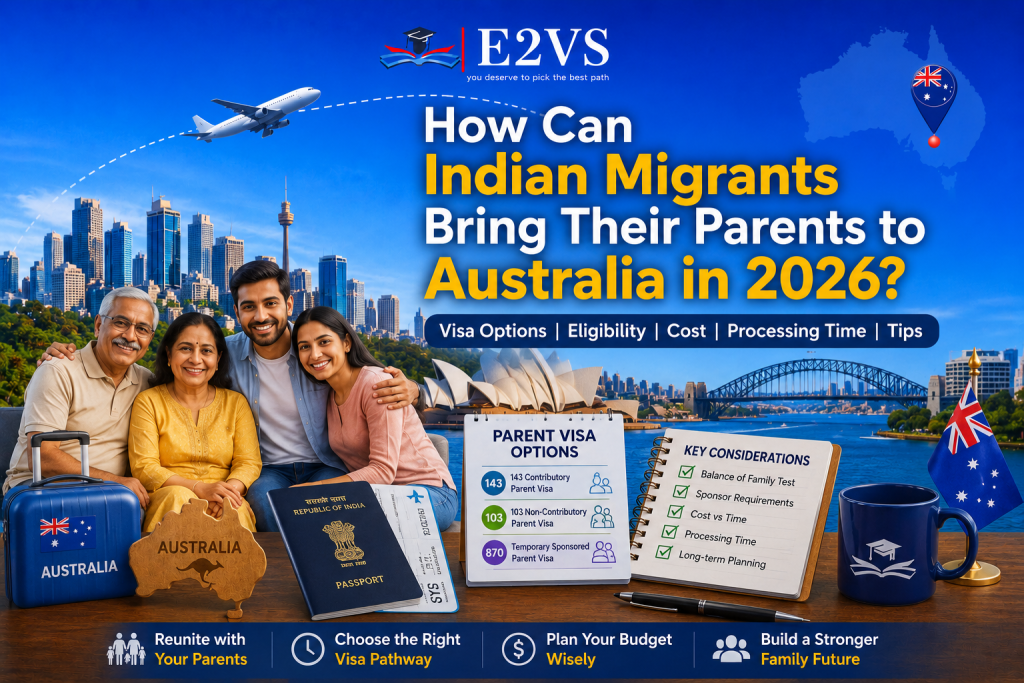
Bringing parents to Australia is an emotional pathway but it is one of the most complex visa pathways. Australian families would like to see their parents spend more time with the grandchildren, get more support in their care and enjoy more family time together. However, it is important to research the best visa to choose as each visa has its own long term effects, its own waiting times and costs.
To make a decision based on your family’s budget, urgency and migration goals, it is important to understand the different types of parent visas that are available. Choosing the right option from the start can save years of waiting time and high financial stress if you are looking for temporary or permanent residency for your parents.
Which Parent Visa Options Are Available for Australia in 2026?
1. Contributory Parent Visa (Subclass 143)
- Faster processing (3–6 years)
- High cost (~AUD 48,000+ per parent)
- Provides permanent residency
- Access to Medicare and other long-term benefits.
This visa is the most frequently chosen visa for those who wish to reunite with their families faster and are willing to accept the higher fee. For families who are well aware of the Australia visa processing time for skilled visas and family visas in Australia, this path may be the most viable option due to the predictable and realistic timeline.
2. Non-Contributory Parent Visa (Subclass 103)
- Very low cost
- Extremely long wait (up to 30 years)
- Permanent upon approval
This is an affordable choice, but one of the longest wait times in the migration program in the country. Generally accepted as suitable for families and those who are not hurried and wish to take an inexpensive route to permanent residency.
3. Temporary Sponsored Parent Visa (Subclass 870)
- Remaining current for a period of 10 years (no PR)
- Renewable in phases
- No BFT is needed.
- Faster processing than permanent parent visas
The subclass 870 visa is best suited to parents who want to stay in Australia for a longer period of time but not go to Australia immediately for permanent residency status. It can also be a temporary solution for families in the short-term while they are getting their documents ready for the permanent visa.
What Are the Eligibility Requirements to Sponsor Parents to Australia?
There are several key requirements for successful sponsorship of parents:
- Child is settled in Australia.
- Attend the Balance of Family Test (Subclass 143/103)
- Must meet the income requirements of Sponsor.
- Sponsor might have to give an Assurance of Support
The parent visa Australia requirements are often more paperwork-heavy and costly than other visas, like the us visa application Australia.
What Is the Balance of Family Test for Parent Visas?
This is one of the key eligibility requirements.
Half or more of your children need to have lived permanently in Australia or there need to be more eligible children in Australia than in any other country.
In particular, where there are four children, two of the parents’ children must be permanently settled in Australia. Any permanent parent visa application will be prevented from being considered if this test is not satisfied.
Should You Choose a Faster Visa or a Lower-Cost Option?
This is the largest choice for most families:
- The higher the payment, the quicker is the processing.
- Spend less → decades long waiting.
The Contributory Parent Visa has much quicker processing times, but it is a much more financial commitment. The Non-Contributory Parent Visa is a less expensive option, but it might not be feasible for parents who want to move in the near future.
The best education consultants for Australia often provide assistance with migration as well, providing information on which visa options are most suitable for a family’s objectives.
What Are the Most Common Mistakes in Parent Visa Applications?
Many applicants experience “unnecessary delays due to unnecessary errors:
- Filing for a visa to the incorrect category.
- Not understanding the full financial commitment.
- Failing the Balance of Family Test
- Submitting incomplete documents
- Ignoring long-term planning
Families can benefit from the expertise of migration professionals like E2VS, who can guide them through the intricate process of sponsorship, paperwork, and strategic visa planning.
What Is the Best Parent Visa Strategy for Indian Migrants in Australia?
Some families do a combination of the above:
- Immediate reuniting visa (Class 870)
- Contributory Parent visa (Subclass 143) for Permanent residency (PR).
This is a way for parents to arrive with the family in Australia rapidly, whilst the permanent visa application is being progressed or prepared. It is particularly helpful when families have a family member with a need for immediate care or families desire grandparents to be there for significant family events.
You should take into account your own financial situation, your parents’ age and health, and the speed you want your parents to move. Planned now can mean a more pleasant and successful meeting in Australia.
Conclusion
Educating parents to Australia is a meaningful action and builds up family bond and long-term security. The visa process can be complicated, but knowing about options, requirements, and financial considerations can help make the process easier to navigate. By planning and enlisting the help of a specialist, Indian migrants can see their parents and have a more integrated family life in Australia.
Frequently Asked Questions
1. Which parent visa is the fastest for Australia in 2026?
The Contributory Parent Visa (Subclass 143) is the quickest visa to become a parent in the permanent visa category, typically taking 3-6 years to process.
2. What is the cheapest parent visa to Australia?
The Non-Contributory Parent Visa (Subclass 103) is the most expensive visa to apply for, but takes up to 30 years to be processed.
3. Can parents stay in Australia for 10 years without PR?
Yes, the Temporary Sponsored Parent Visa (Subclass 870) is available to parents, giving them a 10-year visa to live in Australia, but it is not a permanent visa.
4. What is the Balance of Family Test?
It demands that at least 50% of the parent’s children reside permanently in Australia, or that there are more children residing in Australia than in any other country.
5. Can I apply for Subclass 870 and Subclass 143 together?
The Subclass 870 visa is often the first visa family members will apply for, and a bridge to the Subclass 143 visa, which is a permanent visa.