
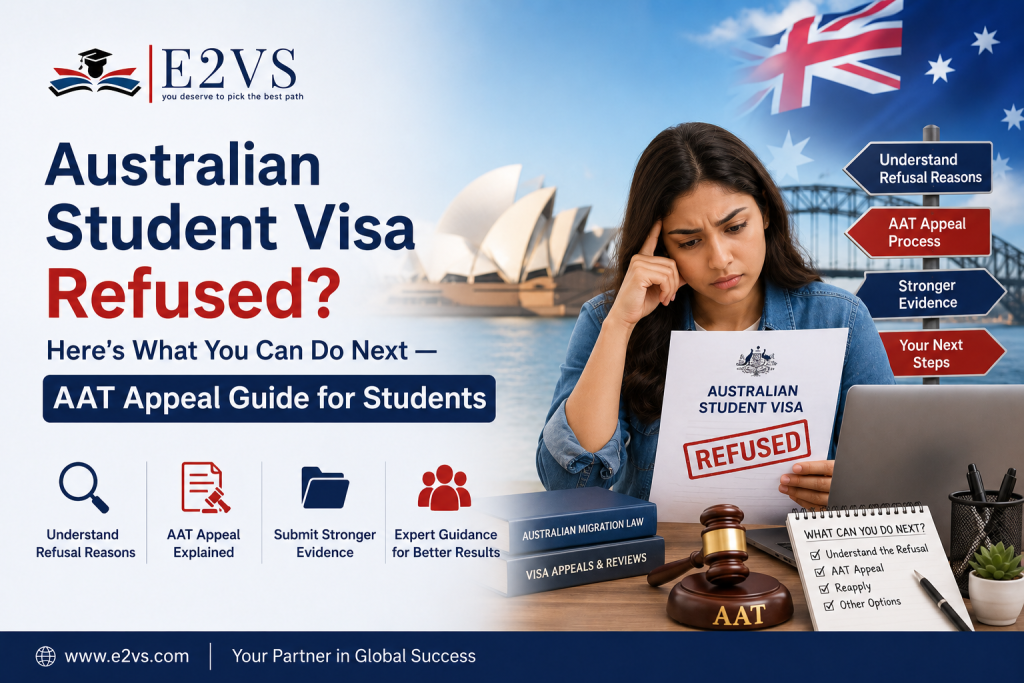
Being refused a student visa is not the end of the world; it’s not a dead end.
Visa refusal does not necessarily spell the end of a student’s plans of studying in Australia, many international students find out that they are surprised. Even if this is the case, there is still legal action that can be taken to contest the ruling and move forward with educational goals. One of the most significant avenues is to appeal to the Administrative Appeals Tribunal (AAT) where the decision can be independently considered.
Why Was My Australia Student Visa Refused?
It is important to find out the reasons for the refusal before deciding to make an appeal. The above reasons are generally described in the refusal letter by the Department of Home Affairs.
Common reasons include:
- Lack of genuine student (GS) criteria.
- Financial insufficiency
- A poor SOP (Statement of Purpose) is a major drawback for most of the students.
- Incomplete documentation
There is a tendency among many applicants who wish to Apply for Australia student visa programmes to underestimate the significance of presenting strong evidence, which is clear evidence of one’s study plans, financial means and academic experience. A few discrepancies in paperwork can create doubts in the eyes of the assessor.
Thoroughly studying the refusal notice may be able to uncover some of the shortcomings of the application and decide if the best course of action is to appeal the refusal or to reapply.
What Is the Administrative Appeals Tribunal (AAT) in Australia?
The Administrative Appeals Tribunal reviews visa decisions made by the Department of Home Affairs.
It is not a reapplication—it’s a legal review.
The AAT examines whether the original decision was made correctly based on the available evidence and applicable migration laws. During the review process, applicants may have the opportunity to provide additional supporting documents or explanations that were not included in the original application.
The tribunal operates independently from the Department of Home Affairs, ensuring a fair and impartial assessment of the case.
How Long Do I Have to Appeal an Australian Visa Refusal?
Applicants need to register for AAT within:
- 21 days (usually)
If you miss it out, your choices are severely limited.
It is very important to act fast. Applicants need to read the refusal notice carefully and seek professional advice if required, after they receive it. Delays can mean that the appellate rights may be lost altogether and it will be much more difficult to challenge the decision at a later stage.
What Happens During an AAT Appeal for Student Visa Refusal?
During the appeal process:
- Your case is reviewed again
- You can submit new evidence
- You may attend a hearing
The hearing allows applicants to explain their circumstances directly and clarify any concerns raised by the original decision-maker. In many cases, additional documentation such as updated financial records, academic evidence, or explanations regarding previous concerns can strengthen the appeal.
Students often seek guidance from the best education consultants for Australia or qualified migration professionals to ensure that all supporting documents are prepared correctly and presented effectively during the review process.
How to Increase Your Chances of Success in an AAT Appeal
There are a number of factors that can affect a successful appeal:
· Direct approach to reasons for refusal by discussing them
· Providing stronger documentation
· Legal representation (highly recommended)
The best appeals address all of the concerns in the refusal letter. When giving a generic explanation or lacking full evidence, success is unlikely.
Applicants need to emphasize their real intention to study, their financial capability, their preparedness for study, and their visa requirements. Having a well-prepared case will have a positive impact on the chances of a favorable outcome.
Important Facts About Appealing an Australian Student Visa Refusal
AAT isn’t just a quick-cut. The weak ones are still rejected.
Some appeals are successful but others are rejected because the problems have never been dealt with. An appeal should not be considered a second chance. Rather, it must be done in a formal, legal fashion with strong evidence and thorough preparation.
The applicant can also make informed decisions on whether to appeal or apply, based on knowing the current trends, policy changes, and other factors including the Australia visa processing time 2026, with regard to their educational timeframe.
Other Options If Your Student Visa Appeal Fails
When an appeal isn’t an option, think of other options:
- Build a stronger profile to reapply
- Select another course or institution;
- Consider other visa options
In some cases, a new application may be more effective, especially if there are significant improvements to be made to the original profile. Better financial information, better grades, or a better plan of study can alleviate past issues.
Should You Appeal or Reapply for an Australian Student Visa?
Avoid a hasty appeal. Sometimes a new application is more powerful than a feeble appeal.
The most effective way is determined by the type of refusal, the evidence at hand and the study duration. It is important to think about the choices and seek professional advice to make it to the best decision. The right choice made at the right time can save time and money and increase your chances for a successful study in Australia.
Frequently Asked Questions (FAQs)
1. Can I appeal against an Australia student visa refusal?
Yes. If you’re able to do so, you can take an appeal to the Administrative Appeals Tribunal (AAT) within the time period provided for in your refusal notice.
2. What is the time to file an appeal with the AAT?
Applicants may appeal a decision of refusal within 21 days of being notified of the refusal. Always check the specific deadline as stated in your refusal notice.
3. What documents can I submit in AAT appeal?
Include other documentation that conflicts with reasons for refusal, including updated financial statements, academic records, revised statements, and more.
4. Appeal or reapply for students’ visa?
This will depend on the situation. If the reason for the refusal is quite debatable, it may be worth appealing. If there are significant improvements to be made, it may be better to apply again.
5. Does the appeal result in higher success rate with the aid of a migration expert?
Although success is never assured, an experienced migration professional can assist in discovering weaknesses, building a stronger case and ensuring that the appeal is presented in the best way.